The Most Expensive Place to Help a Child
- Dr. Monique Salinas

- 1 day ago
- 3 min read
More often than not, schools have a line item for catching children up. Tutoring, intervention blocks, specialists, summer school. The money is real, and is usually spent well.
It is also spent late.
A tutor for a struggling fourth grader runs a district somewhere between one and three thousand dollars a year. The intensive programs, the ones with randomized trials behind them, have run higher still, in the range of thirty-five hundred to forty-three hundred per child.
I am not knocking any of it. Those programs work and they earn their price.
But I want you to look at what is actually being bought. By fourth grade, you are paying a skilled adult to repair a foundation that nobody poured.
What the foundation is made of
Reading is not natural. Nothing in a child’s biology prepared her to look at a shape and hear a sound. That connection has to be built, and it gets built out of parts the brain already has.
Rhythm is one of those parts. So is holding a string of sounds in order long enough to do something with them, which is exactly what a child is doing when she blends letters into a word.
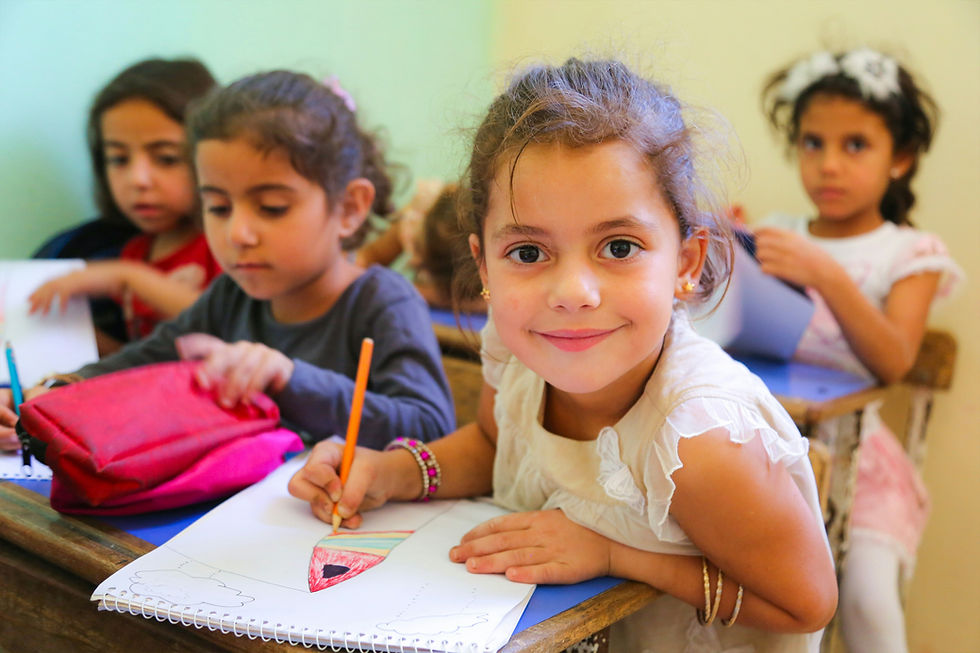
A five-year-old who can hear the beat inside a song is already practicing something phonics will ask of her later. That is the whole idea Mind Meets Music is built on. Ten minutes, twice a week, in Kindergarten.
What it costs
Approximately $799 a year for Kindergarten, with unlimited teachers and students in that grade. At three classrooms of twenty, that is about thirteen dollars a child.
That number invites a comparison I would rather make myself than let someone else make badly.
Tutoring is intensive, individual, and aimed at a child who is already behind. We are a universal program for every child in the room. We are not a substitute for intervention, and if anyone tells you a ten-minute cognitive development lesson can replace a reading specialist, stop listening to them.
The fair comparison is not tutoring against Kindergarten learning. It is early against late.
What happened in schools that could least afford to wait
The U.S. Department of Education funded WestEd to evaluate our original in-class live teaching program. Four schools running it were compared against four matched schools that were not, across about 1,315 children.
These were not comfortable buildings. Every one of them was Title I. Free and reduced lunch eligibility ranged from 64% to 95%.
In the first year, literacy proficiency rose 12.1 percentage points and math rose 17.5. The distance between the children who arrived behind and the children who did not narrowed by sixty-nine percent.
Ninety-seven percent of teachers said it helped their students learn.
“I noticed that some of my students who struggle with academics were very focused during MMM and seemed to participate and engage successfully.”
What I am not going to tell you
I am not going to tell you that a child who does this in Kindergarten will never need a tutor. Nobody has followed those children to fourth grade. Any program claiming otherwise is describing their study, not results.
What I can tell you is narrower, and I think still worth your time. In underfunded schools, ten minutes twice a week moved literacy and math, and it closed distance fastest where that distance was widest.
Building the foundation with five-year-olds is about $13 per child. Repairing it with 9-year-olds costs a great deal more.


Comments